
Yes, Tennessee residents can buy flood insurance right now. Your standard homeowners or renters policy does not cover flood damage, so a separate policy is the only way to protect your home and belongings from rising water. Tennessee participates in the NFIP, which means most homeowners, renters, condo owners, and businesses in the state can access federal flood coverage today.
Three things to do immediately:
- Check your flood zone. Enter your property address at FEMA’s Flood Map Service Center or Tennessee’s property viewer to see whether you’re in a Special Flood Hazard Area (SFHA) like Zone AE or Zone A.
- Get a quote. Use the NFIP Quote Tool at FloodSmart.gov or call a local agent who can compare NFIP and private market options side by side.
- Buy early. A standard NFIP policy carries a 30-day waiting period before coverage activates. Exceptions exist for lender-required purchases and map-change situations, but waiting until a storm is forecast means you’re unprotected.
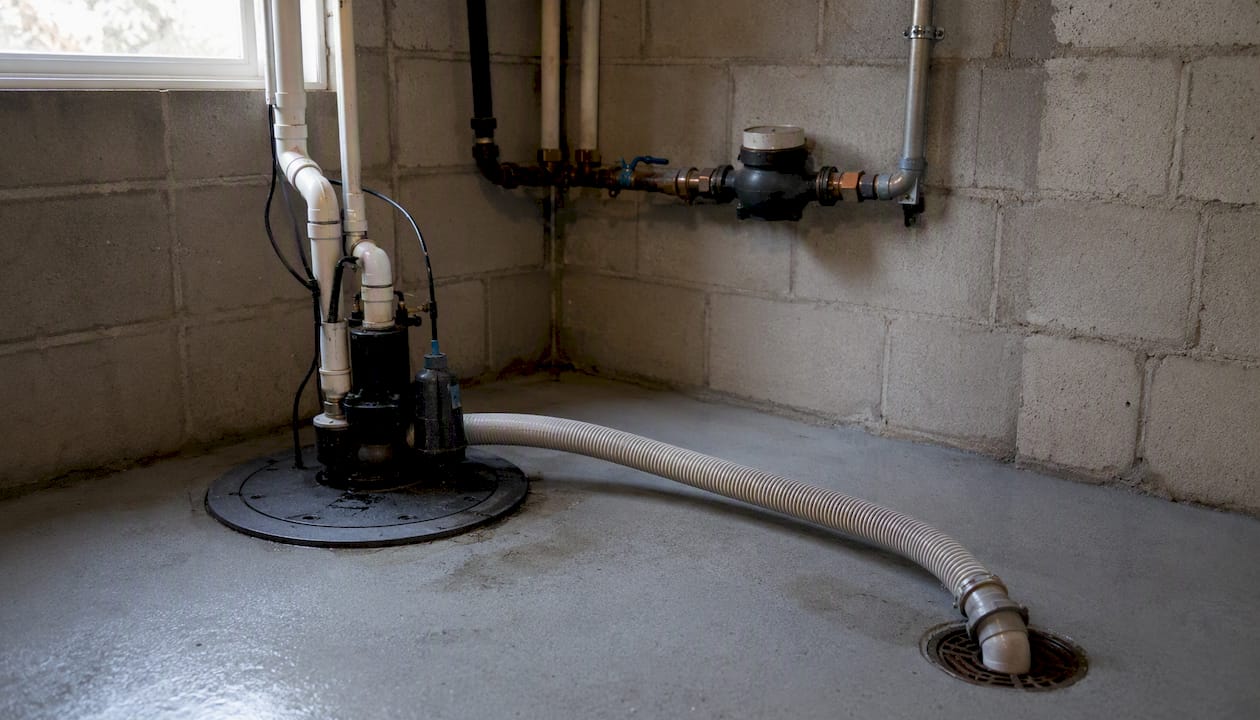
Even a small amount of floodwater can cause severe damage, which is why flood insurance is worth the conversation before you need it.
Table of Contents
- How flood insurance works in Tennessee
- Do you need flood insurance? When it’s required or strongly recommended
- NFIP vs private flood insurance: which one fits your situation?
- How to buy flood insurance in Tennessee, step by step
- Elevation certificates and FEMA flood maps: how they affect your premium
- Why a local Tennessee agent makes a real difference
- Key Takeaways
- What Tennessee agents see that the maps don’t show
- Roman-insurance can help you get flood coverage in West Tennessee
- Authoritative sources and tools to bookmark
How flood insurance works in Tennessee
FEMA administers the NFIP and delivers it through multiple private insurance companies plus NFIP Direct. The program covers millions of policyholders nationwide and provides extensive coverage. Tennessee communities that participate in the NFIP agree to adopt and enforce floodplain management regulations, which is what makes their residents eligible to buy policies.
Who can buy a policy in Tennessee:
- Homeowners and condo owners in participating communities
- Renters who want to protect their personal belongings
- Small businesses and commercial property owners
Coverage splits into two distinct buckets. Building coverage protects the physical structure: foundation, walls, electrical systems, HVAC, and built-in appliances. Contents coverage protects what’s inside: furniture, electronics, clothing, and valuables up to policy limits. Renters can buy contents-only coverage, which is an important distinction since they don’t own the building.
FloodSmart’s types-of-coverage page lays out what each policy type covers and what it excludes. Common NFIP exclusions include temporary housing costs, vehicles, and damage from moisture or mold that the owner could have prevented. Private policies sometimes fill those gaps, which is why comparing both markets matters.
Do you need flood insurance? When it’s required or strongly recommended
Flood insurance is legally required in one specific situation: you have a federally backed mortgage (FHA, VA, Fannie Mae, Freddie Mac, or a federally regulated lender) and your property sits in a mapped Special Flood Hazard Area. Zone AE and Zone A are the most common high-risk designations in Tennessee. If your lender requires it, there’s no choice to make.
Outside that requirement, the decision is yours. But consider these signals:
- Your property is near a river, creek, or retention pond
- Your neighborhood has flooded before, even once
- You’re at lower elevation than surrounding streets
- You’re a renter with electronics, furniture, or other belongings worth replacing
- You want contents protection that your renters policy doesn’t provide
Pro Tip: More than one-quarter of flood insurance claims nationwide come from properties outside mapped high-risk zones. Tennessee’s flash flood events regularly hit Zone X properties. Optional coverage in a lower-risk zone is often significantly cheaper than a high-risk policy, and it’s still real protection.
The flood risk map is a starting point, not a guarantee. A property in Zone X today could be reclassified after a map update, and flash flooding doesn’t follow zone boundaries. If you’re on the fence, get a quote first and then decide.
NFIP vs private flood insurance: which one fits your situation?
Both markets are legitimate options for Tennessee property owners. The right choice depends on your property, your lender’s requirements, and what coverage gaps matter most to you.
NFIP pros:
- Available in any Tennessee community that participates in the program
- Standardized policy form, so you know exactly what you’re getting
- Public tools (NFIP Quote Tool, FloodSmart agent locator) make comparison easy
- Accepted by all federally regulated lenders to satisfy mandatory purchase requirements
NFIP cons:
- Building coverage capped at $250,000; contents capped at $100,000
- No additional living expense coverage if you’re displaced
- Contents coverage is actual cash value, not replacement cost
- Pricing for some properties may be higher than private alternatives
Private flood insurance pros:
- Higher coverage limits for high-value homes
- Optional replacement-cost contents coverage
- Some policies include additional living expenses
- Can be faster to underwrite and may offer better pricing on certain properties
Private flood insurance cons:
- Underwriting criteria vary by carrier and address
- Not every private carrier writes in every Tennessee zip code
- Policy terms differ, so you need to read the fine print carefully
- Some lenders require NFIP specifically, though most now accept qualified private policies
Quick decision checklist:
- Lender requires flood insurance? Confirm whether they accept private policies or require NFIP specifically.
- Home value exceeds $250,000? Private coverage may be necessary to fully protect your investment.
- Want replacement-cost contents or living expense coverage? Look at private options.
- Have an Elevation Certificate? Share it with both an NFIP agent and a private carrier for a true comparison.
- Previous flood loss on the property? Both markets will price that in; compare both anyway.
Tennessee practitioners routinely recommend running both quotes before committing. The difference can be meaningful in either direction depending on your address.
How to buy flood insurance in Tennessee, step by step
Step 1: Confirm your flood zone
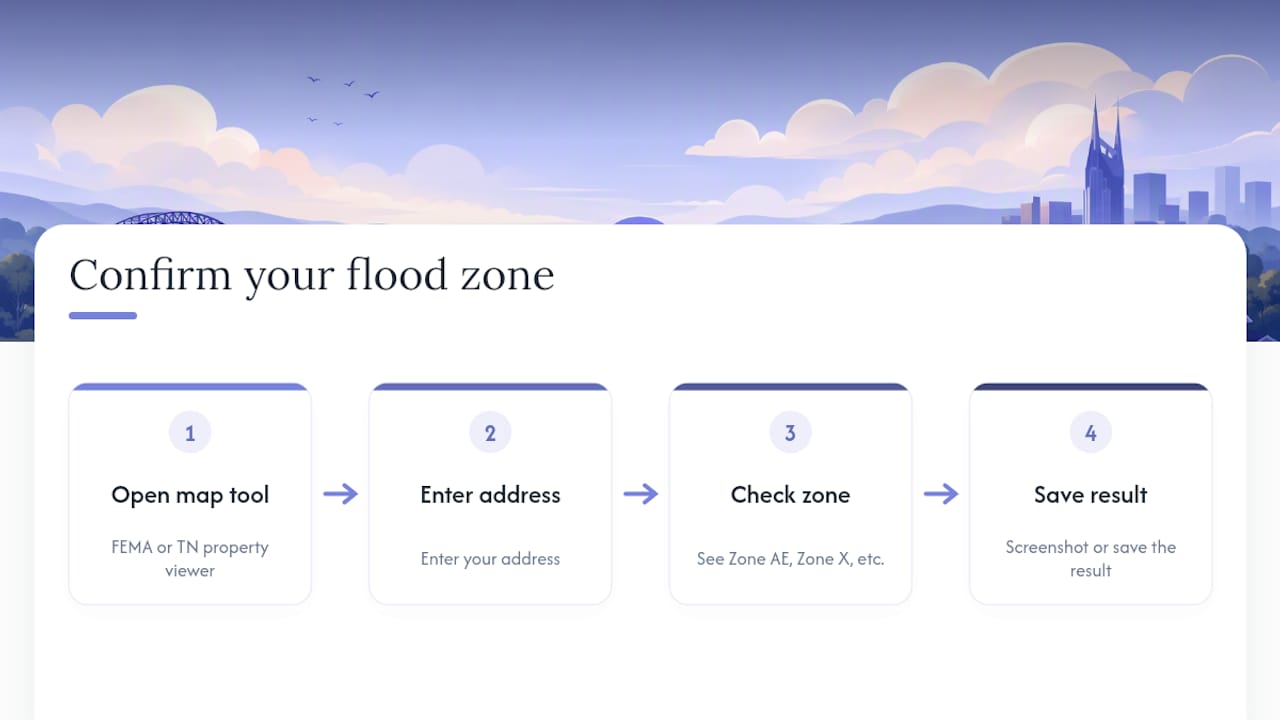
Go to FEMA’s mapping tools or Tennessee’s property viewer and enter your address. You’ll see your flood zone designation (Zone AE, Zone X, etc.) and whether your community participates in the NFIP. Screenshot or save the result.
Step 2: Gather your documents
Before calling an agent or using an online quote tool, have these ready:
- Property address and year built
- Mortgage lender name and loan number (if applicable)
- Estimated building replacement cost (your homeowners policy declarations page often lists this)
- Elevation Certificate, if one already exists for your property
Step 3: Get quotes from multiple sources
Step 4: Submit your application and confirm your effective date
Pay your first premium and submit all required documentation. Your agent will confirm the effective date. For a standard NFIP policy, coverage begins 30 days after the application date. Exceptions apply when a lender requires coverage as part of a loan closing or when a community’s flood map has just been updated.
Pro Tip: Ask your agent to confirm the exact effective date in writing before you assume you’re covered. A policy application is not the same as active coverage.
Elevation certificates and FEMA flood maps: how they affect your premium
An Elevation Certificate (EC) documents the elevation of your building’s lowest floor relative to the Base Flood Elevation on the FEMA map. Insurance companies use that comparison to set your NFIP premium. If your lowest floor is above the BFE, your rate drops. If it’s below, your rate rises. The difference can be hundreds of dollars per year.
How to find or get an EC for your Tennessee property:
- Contact your local floodplain administrator first. They may already have an EC on file for your address, which costs you nothing.
- If no EC exists, you’ll need to hire a licensed Tennessee surveyor to complete one. TEMA and the State NFIP Office do not maintain EC copies for individual properties.
- Before ordering a new survey, always check with your local floodplain administrator. Ordering an EC you don’t need is an avoidable expense.
FEMA’s Flood Map Service Center and Tennessee’s property viewer let you look up your property’s flood zone and the underlying Flood Insurance Rate Map (FIRM). One practical note: FIRMs are updated periodically, and an older map may not reflect current conditions. If your area has seen significant development or drainage changes since the last map revision, your actual risk may differ from what the map shows.
Why a local Tennessee agent makes a real difference
An agent who knows West Tennessee’s flood patterns, the specific flood zones in communities like Arlington and Lakeland, and the quirks of local FEMA map revisions brings something a national 800-number can’t: context. Flood zones in Arlington, TN and flood zones in Lakeland, TN have their own histories and map update timelines. A local agent has seen those conversations before.
What a local agent does for you that a quote tool doesn’t:
- Pulls your FEMA map data and explains what your zone designation actually means for your premium
- Runs both NFIP and private market quotes for your specific address
- Checks whether an Elevation Certificate already exists and advises whether ordering one would lower your rate
- Explains coverage gaps between building and contents policies and helps you decide what limits make sense
- Handles policy servicing and claim support locally, not through a national call center
Questions worth asking any agent before you buy:
- Are you licensed to sell flood insurance in Tennessee?
- Can you compare NFIP and private options for my address?
- Do you service flood claims locally, or does that go to a national team?
- If I have an Elevation Certificate, can you run the numbers before I decide?
Roman-insurance works with homeowners and renters across West Tennessee, with a particular focus on the communities within and around the 38002 area. When you contact Roman-insurance, expect a map review for your address, a documented quote comparison, and a clear timeline from application to coverage activation.
Key Takeaways
Tennessee homeowners and renters need a separate flood policy because standard home and renters coverage excludes flood damage, and the 30-day NFIP waiting period means buying before a storm is the only strategy that works.
| Point | Details |
|---|---|
| Flood is excluded from standard policies | Your homeowners or renters policy does not cover rising water; a separate flood policy is required. |
| 30-day waiting period applies | Standard NFIP policies take effect 30 days after purchase; exceptions exist for lender-required or map-change purchases. |
| Zone X properties still face real risk | More than one-quarter of flood claims nationwide come from outside high-risk zones; optional coverage in Zone X is often affordable. |
| Elevation Certificates can lower premiums | An EC documents your floor elevation vs. the BFE and can materially reduce your NFIP rate; check with your local floodplain administrator before ordering a new survey. |
| Roman-insurance offers local flood guidance | Roman-insurance provides map reviews, NFIP and private quote comparisons, and local policy servicing for West Tennessee homeowners and renters. |
What Tennessee agents see that the maps don’t show
The flood zone map is a useful tool. It’s not the whole picture.
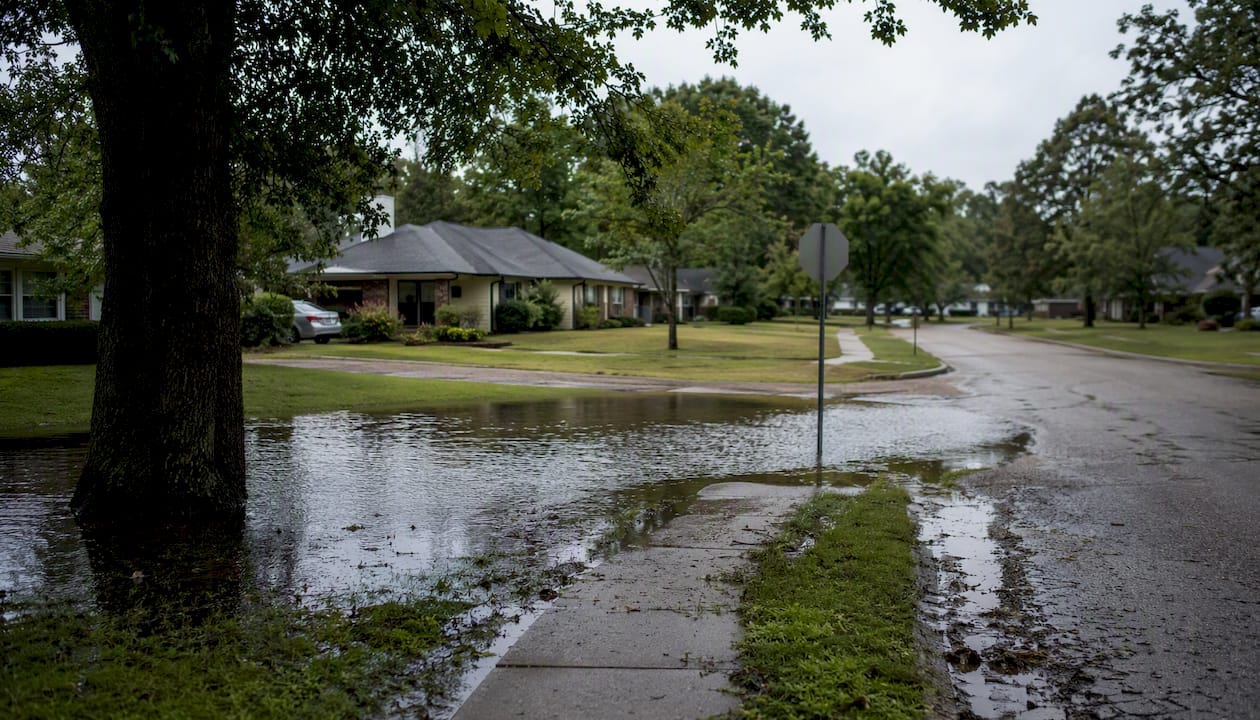
What gets underestimated is how often Tennessee’s flash flood events hit properties that sit comfortably in Zone X on the FEMA map. The map reflects modeled risk based on historical data and topography. It doesn’t account for a new subdivision upstream that changed drainage patterns, or a culvert that hasn’t been maintained in a decade. Those conditions don’t show up on a FIRM until after the damage is done.
The other thing worth saying plainly: the 30-day waiting period is the rule that catches people off guard most often. A homeowner sees a storm forecast, calls an agent, and learns their new policy won’t be active for a month. That’s not a technicality. It’s a real gap in protection that’s entirely avoidable with a little planning.
The practical move is to treat flood insurance like any other annual coverage decision: review it before storm season, not during it. Get the quote, check whether an Elevation Certificate exists for your address, and compare NFIP against private options. The whole process takes less time than most people expect, and the cost difference between doing it now versus after a loss is not a comparison anyone wants to make.
Roman-insurance can help you get flood coverage in West Tennessee
West Tennessee homeowners and renters face real flood exposure, and the gap between a standard homeowners policy and actual flood protection is exactly where Roman-insurance focuses. Rather than navigating FEMA maps, Elevation Certificate questions, and the NFIP vs. private decision on your own, you get a local agent who handles the comparison for you.
Roman-insurance reviews your property’s flood zone, runs NFIP and private market quotes side by side, and walks you through the timeline from application to active coverage. If an Elevation Certificate question comes up, the agency can advise on whether one exists and whether ordering a new survey makes financial sense for your address. Serving homeowners and renters across West Tennessee, with deep familiarity in the communities around 38002.
Ready to see your options? Get a homeowners insurance quote with Roman-insurance or explore renters coverage if you’re protecting contents rather than a structure. A quick map check and quote comparison is the fastest way to know where you stand.
Authoritative sources and tools to bookmark
These are the primary resources for flood maps, quotes, agent locators, and Tennessee-specific guidance:
- FEMA NFIP: The authoritative source for program rules, Risk Rating 2.0 methodology, and policyholder data. Start here to understand how the NFIP works.
- FloodSmart agent locator: Find licensed flood insurance providers in Tennessee by location. Use this when you want a list of agents who write NFIP policies in your area.
- FloodSmart types of coverage: Explains building vs. contents coverage, renter-specific options, and what each policy type includes and excludes.
- FloodSmart rate factors: Breaks down the property-specific factors that drive your premium. Useful before you call an agent so you understand what questions to ask.
- Tennessee TEMA flood insurance page: Tennessee’s official state guidance on buying flood insurance, Elevation Certificates, and NFIP participation. Includes state-specific contacts.
- Tennessee TEMA mapping page: Access FEMA FIRMs, the National Flood Hazard Layer, and Tennessee’s property viewer to check your flood zone and map data.
This article provides general information about flood insurance in Tennessee and is not a substitute for professional insurance advice. Coverage terms, eligibility, and pricing vary by property and carrier. Confirm current program rules and your specific options with a licensed Tennessee insurance agent or FEMA’s NFIP resources.