
Finding the right coverage comes down to three variables: your age, your health, and what you actually need the money to do. For most seniors, that means covering a funeral, paying off a small debt, or leaving something behind for family. The five products below cover those needs at realistic prices.
| Product | Type | Age Eligibility | Coverage Limits | Medical Exam | Best For |
|---|---|---|---|---|---|
| Colonial Penn | Guaranteed whole life | 50–85 | Up to $50,000 | No | No health questions required |
| New York Life | Whole life | 60+ | $10,000–$50,000 | Varies | Stable premiums, long-term coverage |
| TruStage | Simplified issue | 50–85 | Varies by plan | No | Average health, fast approval |
| Fidelity Life RAPIDecision Senior Life Term | Term life | 50–70 | $10,000–$150,000 | No | Healthy seniors, temporary needs |
| Fidelity Life RAPIDecision Senior Whole Life | Whole life | 50–85 | Final expense range | No | Lifelong coverage, cash value |
A few numbers worth knowing before you read further. Final expense policies typically cover $10,000–$50,000, which lines up with average funeral and burial costs of $9,000–$17,000. A $25,000 simplified issue whole life policy for a 70-year-old typically costs about $130 to $180 per month. Guaranteed issue at the same face amount costs more, usually $150–$210 per month, due to acceptance of unknown health risks.
What types of life insurance policies work best for seniors?
Four policy types dominate the senior market, and each fits a different situation.

Term life is still available past 60, but the window closes fast. Most carriers cap issuance at age 75, with 10-year terms being the realistic maximum for new applicants over 70. Fidelity Life’s RAPIDecision Senior Life Term covers $10,000–$150,000 depending on age and health, with rapid underwriting and no medical exam. It suits a healthy senior who needs to cover a specific debt or replace income for a dependent spouse for a defined period.
Whole life never expires and builds a small cash value. Premiums are fixed from day one. New York Life offers traditional whole life for seniors over 60, with coverage typically between $10,000 and $50,000. Fidelity Life’s RAPIDecision Senior Whole Life takes the same concept and adds fast-decision underwriting, making it practical for seniors who want lifelong coverage without a drawn-out application.
Simplified issue sits between standard underwriting and guaranteed acceptance. You answer 3–20 health questions, no physical exam, and coverage starts on day one if you qualify. TruStage uses this model, making it a strong fit for seniors in average health who want affordable coverage quickly. The trade-off: you can be declined.
Guaranteed acceptance asks no health questions at all. Colonial Penn’s guaranteed whole life accepts applicants aged 50–85. Premiums for a $25,000 policy for seniors are typically $150–$210 per month. The catch is a 2-year graded death benefit period for natural death, meaning your beneficiary receives returned premiums plus interest, not the face amount, if you die within the first two years. Guaranteed acceptance costs roughly 30–50% more than simplified issue, with premiums around $150–$210 per month for $25,000 coverage compared to $130–$180 for simplified issue, so try simplified issue first if your health allows it.
How do you choose the right senior life insurance policy?
Start with what you need the money to do. At advanced ages, life insurance is mostly practical for covering final expenses or small debts, not large income replacement. A $10,000–$15,000 final expense policy handles the average funeral. A $100,000 term policy makes sense if a surviving spouse depends on your pension or Social Security income.
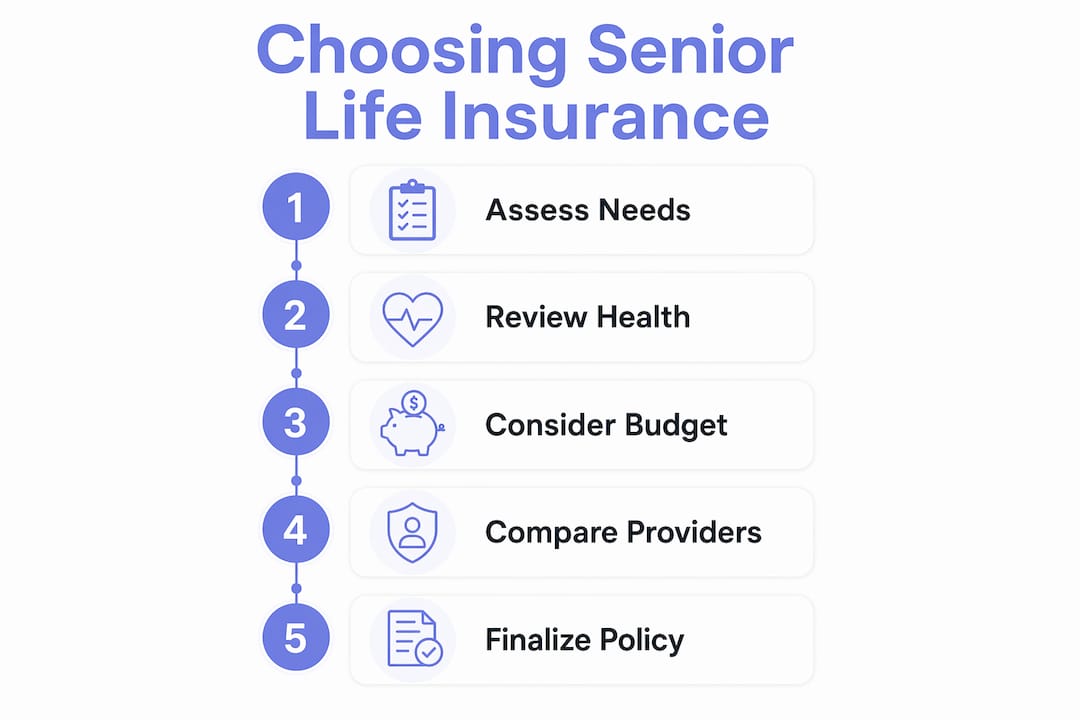
Next, be honest about your health. Controlled Type 2 diabetes, treated hypertension, and similar managed conditions usually qualify for simplified issue, sometimes with a modest surcharge. Serious active conditions like terminal illness, active cancer treatment, or dialysis typically push you toward guaranteed acceptance. Knowing where you land before you apply saves time and avoids unnecessary declines on your record.
Budget matters more than most people admit. Premiums rise sharply with age, and locking in coverage earlier produces real long-term savings. A rate locked at 70 is materially lower than the same coverage at 75 or 80. If you have $20,000 accessible in savings, the actuarial case for buying a $25,000 final expense policy is weaker than it looks. The premium money compounding in a conservative account can outpace the benefit difference.
Pro Tip: Work with a licensed independent agent who specializes in senior underwriting. They can match your health profile to the carrier most likely to approve you at the best rate, without you risking a decline by applying to the wrong company first.
When comparing providers, check their AM Best financial strength rating and their complaint history with your state insurance department. The Texas Department of Insurance and Illinois Department of Insurance both publish consumer guides on life insurance that explain what to look for. Red flags include unsolicited calls pushing immediate decisions, requests for bank account numbers before you have a policy in hand, and premiums that seem too low for the coverage offered.
What does the senior life insurance application process look like?
Most senior-focused policies move faster than traditional underwriting. Simplified issue and guaranteed acceptance applications typically take 15–30 minutes by phone or online. You answer health questions (for simplified issue), provide basic personal information, and name a beneficiary. Approval often comes the same day.

Fully underwritten policies, including some term options, require a medical exam scheduled at your home or a local clinic. Blood work, a brief physical, and a review of your medical records add one to three weeks to the timeline. Fidelity Life’s RAPIDecision products are specifically designed to skip that step for eligible applicants, cutting approval time to days rather than weeks.
Once approved, your first premium payment activates the policy. Keep a copy of the policy document somewhere your beneficiary can find it. Registering the policy with your state’s life insurance locator service is also worth doing, since unclaimed benefits are more common than most families realize.
What exclusions and limitations should seniors watch for?
The 2-year graded death benefit on guaranteed acceptance policies is the most important limitation to understand. If you die from natural causes within the first 24 months, your beneficiary gets a refund of premiums paid plus interest, not the face amount. Accidental death is usually covered in full from day one, even under graded benefit policies.
Suicide clauses are standard across almost all life insurance policies, typically excluding coverage for suicide within the first two years. Misrepresentation on the application is another common exclusion. If you answer health questions inaccurately and the insurer discovers it during a claim review, they can deny the claim or rescind the policy.
Nursing home residency disqualifies applicants from most simplified issue plans. If you or a family member currently lives in a skilled nursing facility, guaranteed acceptance is usually the only path. Coverage amounts at advanced ages also narrow: most carriers cap simplified issue at $25,000–$50,000 for seniors over 75, and after 85, options shrink to $5,000–$15,000 at most carriers.
What riders and additional benefits make sense for seniors?
Riders let you customize a base policy without buying a separate product. The most useful ones for seniors are worth knowing by name.
The accelerated death benefit rider lets you access a portion of the death benefit while still alive if you are diagnosed with a terminal illness. Most carriers include this at no extra cost. It can cover hospice care or final medical bills without forcing your family to liquidate assets.
A waiver of premium rider suspends your premium payments if you become totally disabled. For seniors on fixed incomes, this prevents a policy from lapsing during a health crisis.
The accidental death benefit rider doubles the payout if death results from a covered accident. It is inexpensive and adds meaningful protection for active seniors.
Some whole life policies also accumulate cash value that you can borrow against. Fidelity Life’s RAPIDecision Senior Whole Life includes this feature. The cash value grows slowly in the early years, but it gives you a financial resource if premiums become difficult to maintain.
How can seniors with health conditions still get covered?
Most seniors with common managed conditions qualify for simplified issue. Controlled diabetes, treated high blood pressure, a history of heart disease in remission, and mild COPD are accepted by many carriers, though the specific rules vary. Shopping multiple carriers is the single most effective strategy here, because one carrier’s decline is often another’s approval.
For seniors over 80, simplified issue final expense policies are still available from several carriers with no medical exam and full day-one coverage. A $10,000 policy for an 80-year-old woman runs approximately $98–$134 per month depending on the carrier. Men pay roughly 15–25% more at this age due to actuarial mortality differences, so premiums for $10,000 coverage are about $113–$168 per month for men.
Conditions that typically disqualify applicants from simplified issue include terminal illness, active cancer treatment, organ failure requiring dialysis, and current nursing home residency. For those situations, guaranteed acceptance is the fallback. Colonial Penn accepts applicants up to age 85 with no health questions, making it one of the most accessible options for seniors who cannot pass simplified issue underwriting.
- Try simplified issue first. If declined, move to guaranteed acceptance.
- Avoid applying to multiple carriers simultaneously. Each application creates a record.
- Ask the agent which specific health questions the carrier uses before you apply.
- Disclose conditions accurately. Misrepresentation voids the policy at claim time.
Key Takeaways
For most seniors, a simplified issue final expense policy offers the best balance of affordable premiums, day-one coverage, and no medical exam requirement.
| Point | Details |
|---|---|
| Match policy to goal | Final expense whole life covers funerals; term life covers debts or income replacement for a set period. |
| Simplified issue beats guaranteed acceptance | Simplified issue costs 30–50% less and provides day-one coverage if you qualify. |
| Premiums rise sharply with age | A rate locked at 70 is materially lower than the same coverage at 75 or 80. |
| Health conditions are not automatic disqualifiers | Controlled diabetes and treated hypertension qualify at many simplified issue carriers. |
| Roman-insurance for local guidance | Roman-insurance connects West Tennessee seniors with licensed agents who compare options and clarify terms. |
Roman-insurance helps West Tennessee seniors find the right coverage
Sorting through policy types, health questions, and carrier rules is easier with someone who knows the local market. Roman-insurance serves seniors in West Tennessee, primarily within the Germantown and Memphis area, helping residents compare life insurance options from Allstate and other carriers without the pressure of a one-size-fits-all pitch.

A licensed agent at Roman-insurance can review your health profile, identify which carriers are most likely to approve you, and walk you through the actual policy terms before you sign anything. That kind of hands-on guidance matters when the difference between simplified issue and guaranteed acceptance is $50 per month and two years of waiting. Roman-insurance also handles home and auto coverage for West Tennessee residents, so you can consolidate your insurance review in one conversation. Reach out directly to get a personalized quote tailored to your age, health, and coverage goals.