
Final expense insurance is defined as a whole life policy designed to cover funeral costs, burial expenses, and small end-of-life debts, with coverage typically ranging from $5,000 to $25,000. The cost of final expense insurance falls between $14 and over $200 per month, depending on your age, gender, health status, tobacco use, and the coverage amount you choose. A 50-year-old non-smoker pays roughly $22 to $44 monthly for $10,000 in coverage, while a 75-year-old pays $72 to $130 for that same policy. Locking in your rate early is the single most effective way to keep premiums low for life.
How does age, gender, and health affect final expense insurance pricing?
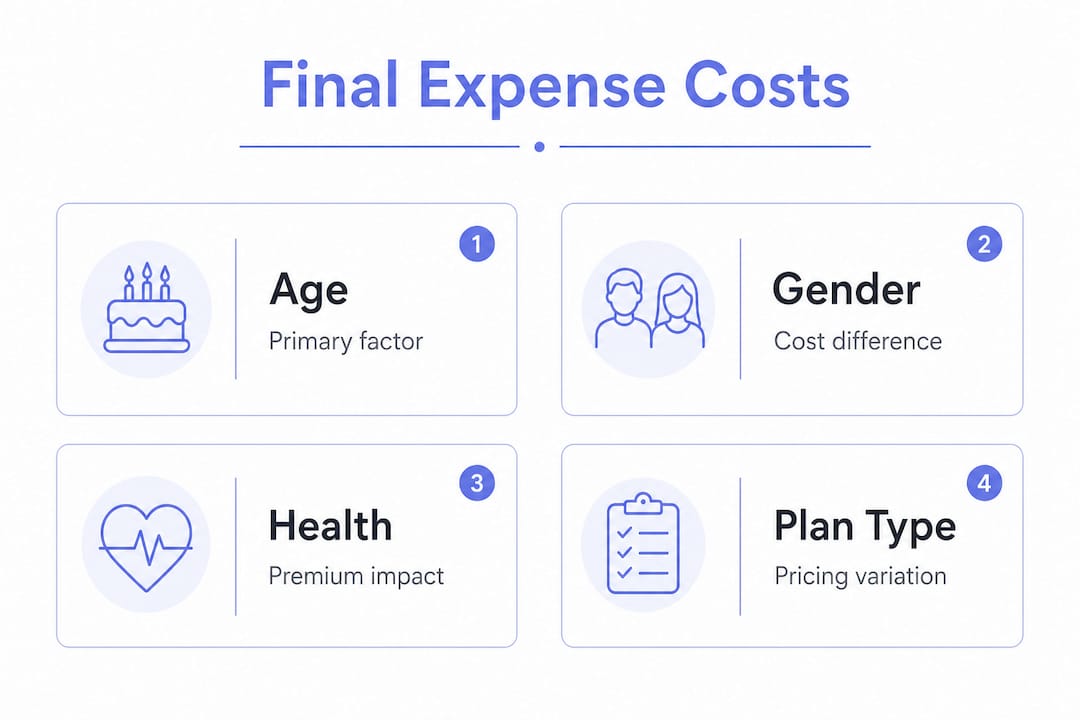
Age is the most significant driver of final expense insurance pricing. Premiums rise sharply with age, and buying at 50 versus 70 can more than double your monthly cost for identical $10,000 coverage. Every year you wait, underwriters assign you a higher mortality risk, and that cost gets baked into your rate permanently.

Gender plays a measurable role as well. Women pay 15–25% less than men for the same coverage because they statistically live longer, which reduces the insurer’s risk. At age 65, a female non-smoker pays $41 to $54 per month for $10,000 in coverage, while a male non-smoker pays $57 to $72 for the exact same policy.
Tobacco use hits your premium hard. Smokers pay 30–50% more than non-smokers for equivalent coverage. A 70-year-old female smoker pays $76 to $98 monthly for a $10,000 policy, compared to $53 to $68 for a non-smoker at the same age. If you have quit smoking within the past 12 months, many carriers will still classify you as a tobacco user, so confirm the exact cessation timeline before applying.
Sample monthly premiums for $10,000 coverage (non-smoker)
| Age | Female | Male |
|---|---|---|
| 50 | $22–$35 | $30–$44 |
| 60 | $30–$45 | $42–$58 |
| 65 | $41–$54 | $57–$72 |
| 70 | $53–$68 | $65–$85 |
| 75 | $72–$95 | $95–$130 |
Pro Tip: Apply while your health is stable. Underwriters reward applicants who have no recent hospitalizations, no oxygen use, and no active cancer treatment with the lowest available rates.
How does coverage amount and plan type shape your monthly premium?
Coverage amount and plan type are the two levers you control directly. Most applicants aged 50–75 seeking $10,000 to $25,000 in coverage pay between $30 and $70 monthly if they are in reasonable health and do not use tobacco. That translates to $360 to $840 per year. Choosing $25,000 instead of $10,000 roughly doubles your monthly premium, so matching your coverage to your actual funeral and debt costs matters.
Simplified issue vs. guaranteed issue plans
Two plan types dominate the final expense market, and they differ significantly in cost and eligibility.
Simplified issue plans require you to answer a short set of health questions but involve no medical exam. These policies provide immediate full benefits from day one and carry lower premiums than guaranteed issue options. If you can qualify, simplified issue is almost always the better financial choice.
Guaranteed issue plans ask no health questions at all, which makes them accessible to people with serious medical conditions. The trade-off is real. Guaranteed issue premiums run 30–60% higher than level benefit plans, and most policies include a two-year waiting period before the full death benefit pays out. During that window, beneficiaries typically receive only a return of premiums paid plus interest.
Cost comparison by plan type ($10,000 coverage, age 65, female)
| Plan type | Monthly premium | Waiting period | Health questions |
|---|---|---|---|
| Simplified issue (level) | $41–$54 | None | Yes |
| Guaranteed issue | $65–$85 | 2 years | No |
Pro Tip: Calculate your expected funeral cost before choosing a coverage amount. The National Funeral Directors Association reports the median cost of a funeral with burial at around $8,000 to $9,000. A $10,000 policy covers that with room for small debts, and it keeps your premium manageable.
How do you find affordable final expense plans and avoid pricing mistakes?
Shopping widely is the most direct path to lower final expense insurance pricing. Comparing quotes across multiple carriers can produce savings of 30–50% for identical coverage because each insurer uses different underwriting criteria. A health condition that triggers a higher rate at one carrier may be viewed more favorably at another.
Working with an independent broker gives you access to a broader market. Independent brokers can access 30 or more A-rated carriers and match your specific health profile to the insurer offering the best terms. That is a structural advantage over going directly to a single carrier, where you get one price and no comparison.
Here are the most common pricing mistakes to avoid:
- Waiting too long to apply. Delaying coverage by 20 years can increase your premium by more than 120% for the same policy. The math strongly favors early action.
- Assuming guaranteed issue is your only option. Many people with manageable health conditions qualify for simplified issue plans at significantly lower rates.
- Choosing a premium that strains your budget. A policy you cannot afford to keep is worthless. Pick a coverage amount that fits your monthly cash flow.
- Not confirming the rate is guaranteed level. Some policies advertise low entry rates that increase over time. Confirm in writing that your premium is fixed for life.
- Ignoring tobacco cessation benefits. Quitting tobacco and waiting the required period before applying can reduce your premium by 30–50%.
Pro Tip: Ask every carrier whether your premium is “guaranteed level for life.” If the answer is anything other than a clear yes, keep shopping. You want a rate that stays fixed regardless of age or health changes.
What does final expense insurance actually cost over time?
Premiums are locked at the time of application and never increase, regardless of how your health changes or how old you get. That predictability is genuinely valuable for retirees on fixed incomes. You know exactly what you will pay every month for the rest of your life.
The long-term math is worth understanding. If a 60-year-old male pays $50 per month for a $10,000 policy, he pays $600 per year. After 16 years, at age 76, he has paid $9,600 in total premiums. The policy still pays $10,000 to his beneficiaries regardless of when he passes. The earlier you start, the more years the policy works in your favor before total premiums approach the death benefit.
Annualized cost examples for common coverage amounts (non-smoker, simplified issue)
| Coverage amount | Age 55, female | Age 65, male | Age 70, male |
|---|---|---|---|
| $10,000 | ~$336/year | ~$684/year | ~$900/year |
| $15,000 | ~$504/year | ~$1,020/year | ~$1,350/year |
| $25,000 | ~$840/year | ~$1,700/year | ~$2,250/year |
A fixed premium contract provides budget stability that savings accounts cannot match. A savings account requires discipline and time to grow. A final expense policy pays the full death benefit from day one, even if you pass away shortly after the first premium.
Key Takeaways
The cost of final expense insurance is primarily determined by age, health, and plan type, with premiums locked for life at the rate you qualify for on the day you apply.
| Point | Details |
|---|---|
| Age drives cost most | A 75-year-old pays up to three times more monthly than a 50-year-old for identical coverage. |
| Women pay less | Female applicants pay 15–25% less than males due to longer life expectancy. |
| Plan type changes the price | Guaranteed issue plans cost 30–60% more than simplified issue and include a 2-year waiting period. |
| Early application saves money | Delaying by 20 years can raise premiums by more than 120% for the same policy. |
| Compare multiple carriers | Shopping across 30 or more A-rated carriers can cut your premium by up to 50%. |
What I’ve learned about final expense insurance after years in this business
The biggest mistake I see people make is waiting. They assume they have time, or they think their health is too poor to qualify for anything affordable. Both assumptions cost them money.
The reality is that most people in their 50s and early 60s qualify for simplified issue plans at rates that fit comfortably into a fixed income budget. The window for those rates closes faster than most people expect. By the time a health event forces the conversation, the only option left is often a guaranteed issue plan with a waiting period and a premium that is 40% higher.
I have also noticed that women consistently underestimate how much their gender works in their favor. A 65-year-old woman in average health can often lock in a $10,000 policy for under $50 a month. That is a genuinely affordable number, and it provides real peace of mind for a family that would otherwise face an unexpected $8,000 to $9,000 funeral bill.
The other thing worth saying plainly: final expense insurance is not a replacement for comprehensive life insurance. It is a targeted tool for a specific problem. If you match the coverage amount to your actual expected costs, you avoid overpaying for coverage you do not need. That discipline keeps the premium low and the policy sustainable for decades.
My advice is simple. Get quotes while you are healthy. Compare at least three carriers. Confirm the rate is guaranteed level for life. Then lock it in and stop worrying about it.
— josh
How Roman-insurance helps you find the right final expense coverage
Roman-insurance works with multiple A-rated carriers to find final expense insurance pricing that fits your age, health profile, and budget. Getting the right policy starts with comparing real quotes, not guessing at costs.

Whether you are in Germantown, Arlington, or anywhere in West Tennessee, the team at Roman-insurance reviews your situation and matches you with carriers that offer guaranteed level premiums and immediate coverage where you qualify. Roman-insurance also handles your broader insurance picture, from homeowners coverage to auto, so you can consolidate your protection with one trusted local source. Reach out today and get a clear number you can plan around.
FAQ
What is the average cost of burial insurance per month?
Most applicants aged 50–75 in reasonable health pay between $30 and $70 per month for $10,000 to $25,000 in coverage. Your exact rate depends on your age, gender, tobacco use, and the plan type you qualify for.
Does the cost of final expense insurance increase over time?
No. Premiums are locked at application and never increase, regardless of age or health changes. This is one of the core benefits of whole life final expense policies.
What is the cheapest type of final expense policy?
Simplified issue plans carry the lowest premiums because applicants answer health questions and qualify for immediate full benefits. Guaranteed issue plans cost 30–60% more and include a waiting period before full benefits apply.
How much does a $10,000 final expense policy cost at age 70?
A 70-year-old male non-smoker typically pays $65 to $85 per month for $10,000 in coverage. A female non-smoker at the same age pays $53 to $68 per month for the same policy.
Does smoking affect final expense insurance rates?
Yes, significantly. Smokers pay 30–50% more than non-smokers for the same coverage. Quitting tobacco and waiting the required period before applying is one of the most effective ways to reduce your premium.